हरे राम हरे राम, राम राम हरे हरे।।
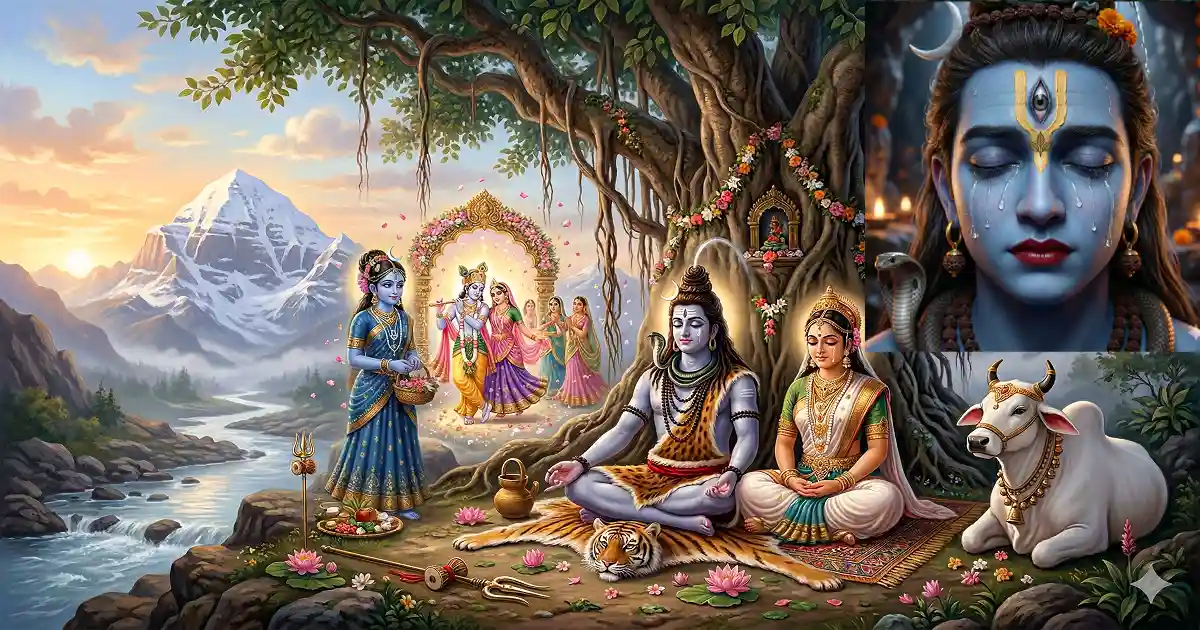
Bhakta-Bhāva-Smaraṇa
is Topmost Bhakti
21 Chapters of the Supreme Secret of All Sādhana: Meditation on the Inner Feelings of the Pure Devotees as the Only Gateway into the Eternal Pastimes of the Lord
By Shrīpāda Sadhu Mahāraja
हिन्दी में पढ़ें या शेयर करें - t.ly/bhaktabhava
chant hare kṛṣṇa with bhakta-bhāva-smaraṇa
the essence: lovingly meditate on the shuddha bhaktas' dāsānudāsa bhāvas for each other in the service of bhagavāna while doing all practices of navadhā bhakti, that is the most pleasing offering to bhagavāna in the whole creation, who personally advents to relish those very bhāvas.
mama janmani janmanīśvare; bhavatād bhaktir ahaitukī tvayi
— Śrī Caitanya Mahāprabhu (Śikṣāṣṭaka 4)
"O Lord of My life! I do not ask for liberation from birth and death. Let Me take birth again and again — My only prayer is that in every life, causeless devotion unto You and Your devotees may flow through Me."
Prastavānā: Introduction — The Question That Burns in Every Sādhaka's Heart
Every sincere practitioner of bhakti yoga, at some point in their journey, arrives at a question that burns deeper than any other: How do I actually enter the eternal pastimes (nitya-līlā) of the Lord? How do I move from mechanical practice to living, breathing, weeping devotion? What is the real secret?
The śāstras of the Gauḍīya Vaiṣṇava sampradāya — the Śrīmad Bhāgavatam, the Caitanya Caritāmṛta, the Bṛhad-bhāgavatāmṛta, the Mādhurya-kādambinī, the Bhakti-rasāmṛta-sindhu, and countless other luminous texts — all converge upon a single, breathtaking answer. That answer is not what the conditioned mind expects. It is not a technique. It is not a visualization. It is not even a prayer for one's own liberation. It is something far more radical, far more humble, and far more powerful.
That answer is bhakta-bhāva-smaraṇa — the continuous, loving, all-absorbing meditation on the inner feelings, the sacred moods, the heart-states (bhāvas) of the pure devotees (śuddha-bhaktas) of the Lord.
This is the supreme secret (rahasya) of all spiritual practice. This is the gateway through which the conditioned soul, however fallen, however distant from perfection, can actually touch the hem of the eternal world. Not by one's own strength. Not even by the direct mercy of the Lord alone. But by absorbing one's consciousness in the bhāva of those who already live and breathe within that eternal reality — the parama-bhaktas, the topmost devotees, the eternal associates of Śrī Śrī Rādhā Kṛṣṇa and Śrī Śrī Nitāi Gaura.
Let us now unfold this supreme teaching through the words of the śāstras themselves, through the lives of the ācāryas, and through the very example of Śrī Caitanya Mahāprabhu, who is Kṛṣṇa Himself appearing in the mood of His greatest devotee.
Chp One: The Foundational Verse — Ei-Mata Bhakta-Bhāva
Caitanya Caritāmṛta, Ādi-līlā 1.4.41
"In this way, having fully accepted and embraced the bhāva (inner feeling, mood, emotional disposition) of a devotee, He [Śrī Caitanya Mahāprabhu] personally practiced bhakti and then preached it to the world."
This verse is the philosophical nucleus of the entire Caitanya Caritāmṛta and, by extension, of the entire Gauḍīya Vaiṣṇava tradition. Let us examine it word by word, for within each word lies an ocean of meaning:
ei-mata — "in this way," "in this manner." This refers to the preceding verses that describe how Kṛṣṇa Himself desired to understand the depth of Rādhārāṇī's love. The Supreme Lord, the source of all bliss, the reservoir of all rasas, found Himself unable to comprehend the full extent of His own devotee's love for Him. This is the most astonishing statement in all of theology — that God Himself is bewildered by the love of His devotee.
bhakta-bhāva — "the bhāva of the devotee." Not bhagavad-bhāva (the mood of God), not ātma-bhāva (the mood of the self), but bhakta-bhāva — the mood, the inner feeling, the emotional reality of the bhakta. This is the key. The entire creation moves on the axis of bhakta-bhāva. The Lord Himself descends to taste it. What greater endorsement could there possibly be for the practice of bhakta-bhāva-smaraṇa?
kari' aṅgīkāra — "having accepted, having embraced, having taken on as one's own." The word aṅgīkāra is extraordinarily significant. It does not mean merely to observe or appreciate. It means to fully embody, to make one's own limb (aṅga), to internalize so completely that there is no difference between oneself and the bhāva being contemplated. Śrī Kṛṣṇadāsa Kavirāja Gosvāmī is telling us that even Kṛṣṇa had to perform aṅgīkāra of bhakta-bhāva — He had to fully take it on, absorb Himself in it, become it.
āpani ācari' — "personally practicing." This is the supreme example. The Lord did not merely theorize about bhakta-bhāva. He practiced it. He lived it. He wept. He rolled on the ground. He called out in separation. He experienced the full spectrum of a devotee's love — and He did this publicly, as His sādhana, as His life.
bhakti karila pracāra — "preached bhakti, spread the message of devotion." And here is the crucial conclusion: no one can practice and preach bhakti without first accepting bhakta-bhāva. The preaching itself, the transmission of devotion from heart to heart, is only possible when one is saturated with bhakta-bhāva. Without it, all preaching is hollow, all practice is mechanical, all spiritual life is a performance rather than a reality.
Śrīla Kṛṣṇadāsa Kavirāja Gosvāmī further illuminates the reason for Mahāprabhu's descent:
"What is the extent of the glory of Rādhā's love? What is the nature of My own astonishing sweetness that She alone tastes? And what is the happiness She experiences in tasting My sweetness? Desiring to understand these three things, the moon of Hari appeared in the ocean of Śacī's womb, enriched with the bhāva of Rādhā."
Here the word tad-bhāvāḍhyaḥ is paramount — "enriched with, filled with, overflowing with Her bhāva." The Lord did not come merely to observe Rādhā's bhāva from outside. He came to become it, to live it, to be it. This is the supreme model for all sādhakas: the path is not observation but absorption, not darśana alone but bhāva-smaraṇa.
Chp Two: Why Premature Smaraṇa of Līlā Does Not Melt the Heart
The Trap of the Conditioned Mind in Meditation
The Gauḍīya Vaiṣṇava ācāryas have consistently warned against a specific danger in sādhana: the premature attempt to visualize oneself within the divine pastimes (līlā-smaraṇa) before one's heart has been purified by the grace of the devotees.
Śrīla Viśvanātha Cakravartī Ṭhākura, in his immortal Mādhurya-kādambinī, describes the stages of bhakti with surgical precision:
"First comes faith (śraddhā), then association with pure devotees (sādhu-saṅga), then the practice of devotional service (bhajana-kriyā), then the clearing of unwanted things from the heart (anartha-nivṛtti), then steadiness (niṣṭhā), then taste (ruci), then attachment (āsakti), then the awakening of spiritual emotion (bhāva), and then the full flowering of divine love (prema)."
Now, in the stage of bhajana-kriyā and anartha-nivṛtti — which is where most sādhakas find themselves — the heart is still covered with the dust of material contamination. The false ego (ahaṅkāra) is still very much active. And here is the crucial point: any meditation performed through the lens of the false ego, no matter how elevated the subject matter, will be tinged with selfishness.
When a neophyte tries to visualize the rūpa (form) of the Lord, what actually happens? The mind, still conditioned by material impressions, projects its own limited conceptions onto the infinite. The meditation becomes a subtle form of sense gratification — the enjoyer mentality (bhoktā-bhāva) disguised in spiritual clothing.
When a neophyte prays, "O Lord, please end my cycle of birth and death," what is the underlying mood? It is ātma-sukha — seeking one's own happiness. It is still centered on "I" and "mine." Even the prayer for mukti (liberation) is, in the Gauḍīya understanding, a form of selfishness:
The devotees reject even liberation as a distraction from pure service in bhakta-bhāva-smaraṇa.
"O Lord of the universe, I do not desire wealth, followers, company, or poetic fame. My only prayer is that in every birth, causeless devotion to You and Your devotees may arise in my heart."
Notice the extraordinary quality of this prayer: it does not ask for the end of birth. It does not ask to see the Lord's form. It does not ask for anything for the self at all. It asks only for bhakti — and it is willing to take infinite births for it. This is the mood of a pure devotee. And this is the mood we must meditate upon — not imitate, but absorb ourselves in through loving contemplation.
Śrīla Bhaktisiddhānta Sarasvatī Ṭhākura was famously uncompromising on this point. He repeatedly emphasized that prākṛta-sahajiyās (those who cheaply imitate the symptoms of advanced devotion) fall into the greatest danger by attempting rasa-līlā-smaraṇa without first purifying the heart through nāma-saṅkīrtana and sādhu-saṅga. The heart that is full of anarthas cannot contain the pure līlā. It will inevitably distort it.
The Bhāgavatam itself gives this warning through the mouth of Śrī Kṛṣṇa:
"O lotus-eyed Lord, those who consider themselves liberated but who lack devotion to You have impure intelligence. Even though they rise to the highest position through severe austerities, they fall down again because they neglect Your lotus feet."
If even those who have attained paramapada can fall due to lack of bhakti, how much more dangerous is it for a neophyte to attempt direct līlā-smaraṇa without the shelter of bhakta-bhāva?
The answer, then, is not to abandon meditation but to redirect it. Instead of meditating on the līlā directly (which will be filtered through the distorting lens of the conditioned mind), meditate on the bhāva of those who are already in the līlā. Their bhāva is pure. Their bhāva is self-luminous. Their bhāva does not need our purification — it purifies us.
Chp Three: The Rahasya of All Rahasyas — Bhakta-Bhāva-Smaraṇa as the Supreme Sādhana
What Exactly Is Bhakta-Bhāva-Smaraṇa?
Bhakta-bhāva-smaraṇa is the continuous, loving, reverential, and deeply internalized meditation upon the inner emotional states — the bhāvas — of the pure devotees of the Lord. It is not merely thinking about devotees. It is not merely remembering their external activities, their names, their forms, their deeds. It is the attempt — humble, prayerful, tear-filled — to feel what they feel, to enter their heart-space, to taste even a drop of their love for the Lord.
This is the secret of all secrets (rahasya-ratna):
"Bhakti is awakened through the association of devotees of the Lord. And the association of such pure devotees is obtained by previously accumulated spiritual merit."
But what is the deepest form of sādhu-saṅga? It is not merely sitting in the same room as a devotee. It is not merely hearing their words with the external ear. The deepest sādhu-saṅga is bhāva-saṅga — the communion of heart with heart, the absorption of one's consciousness in the bhāva of the sādhu. This can be done in their physical presence, but it can also be done across time and space, through meditation, through śāstra, through kīrtana, through the living transmission of bhāva that flows through the paramparā.
The Śrīmad Bhāgavatam reveals the potency of this through the example of Bharata Muni, the sages at Naimiṣāraṇya, and most powerfully through the gopīs of Vṛndāvana. The gopīs' love for Kṛṣṇa was not something they cultivated through a technique. It arose spontaneously through their constant absorption in Kṛṣṇa-bhāva, which itself was awakened through their association with other gopīs who were already immersed in that bhāva. The bhāva spreads like a fragrance, like a wildfire, like the moon's light reflected from surface to surface.
The Bhāgavata's Testimony
"In the association of pure devotees, discussions about My heroic activities and pastimes become a healing nectar for the ears and the heart. By regularly relishing these discussions, one quickly progresses on the path of liberation, and sequentially develops faith (śraddhā), attachment (rati), and devotion (bhakti)."
The key phrase here is satāṁ prasaṅgān — "through the association of the pure devotees." And notice: the kathā (narrative, discussion) becomes rasāyana (elixir, alchemical medicine) only when it flows through the heart of a sat-bhakta. The same words, the same stories, the same ślokas, when received through the bhāva of a pure devotee, have a completely different effect than when read in an academic or self-motivated context.
This is why Śrīla Rūpa Gosvāmī, in his Bhakti-rasāmṛta-sindhu, places sādhu-saṅga as the single most important aṅga of sādhana:
"Association with devotees, chanting the holy name, hearing the Bhāgavatam, residing in Mathurā, and worshipping the Deity with faith — these are the five most powerful limbs of devotional service. Even a slight contact with any one of these five gives rise to love for Kṛṣṇa."
And among these five, sādhu-saṅga is listed first — because it is through the bhāva of the sādhu that all other practices become illuminated and effective. The nāma chanted in the mood of a pure devotee is a different nāma than the nāma chanted mechanically. The Bhāgavatam heard through the heart of a bhāgavata is a different Bhāgavatam than the one read alone in one's room.
Chp Four A: Bhāva-Grāhī Janārdana — The Lord Who Accepts Only Bhāva
The Lord's Own Declaration
One of the most profound statements in all of Vaiṣṇava theology is the characterization of the Lord as Bhāva-grāhī Janārdana — "Janārdana (Viṣṇu/Kṛṣṇa), who accepts only the bhāva."
"O Nārada, I do not dwell in Vaikuṇṭha, nor in the hearts of the yogīs. I dwell wherever My devotees sing My glories."
The Lord Himself declares: He does not reside in His own supreme abode as much as He resides where His devotees' bhāva flows. He is drawn to bhakta-bhāva. He is captured by it. He is helpless before it. If the Lord Himself is enchanted by nothing other than bhakta-bhāva, then what could be more logical, more scientific, more effective, than for the sādhaka to meditate 24/7 on exactly that — the bhāvas of the pure devotees?
The Bhāgavatam records a stunning verse from the Lord's own mouth:
"O brāhmaṇa, I am completely under the control of My devotees. I am not at all independent. My heart is conquered by the saintly devotees. I am the lover of My devotees, and they are dear to Me."
The phrase sādhubhir grasta-hṛdayaḥ — "His heart is seized, captured, swallowed by the sādhus" — reveals the stunning reality: the Lord's heart belongs to His devotees. He cannot resist their bhāva. He becomes their captive. And therefore, the most direct route to the Lord's heart is not to try to reach Him directly (which, as a conditioned soul, one cannot do), but to meditate on the bhāvas of those who have already captured His heart.
This is the logic of bhakta-bhāva-smaraṇa. It is not merely sentimental. It is the most rigorous and effective spiritual technology available to the jīva.
Kṛṣṇa's Declaration in the Gītā
"My devotee never perishes."
This verse is traditionally understood to mean that the Lord protects His devotees. But there is a deeper reading, one which the ācāryas hint at: the Lord protects not only His devotees but also those who meditate on the bhāvas of His devotees. For in meditating on bhakta-bhāva, one is already performing the highest form of bhakti. One is already in sādhu-saṅga of the deepest kind. One is already touching the hem of the eternal world.
The full verse reads:
"He quickly becomes righteous and attains eternal peace. O son of Kuntī, declare it boldly: My devotee never perishes."
The word kṣipram — "quickly" — is significant. The transformation is rapid for one who is immersed in bhakta-bhāva. There is no prolonged, torturous, multi-lifetime struggle. The bhāva of the pure devotee, once it enters the consciousness of the sādhaka, begins to work like a divine catalyst, accelerating the purification of the heart beyond anything that can be achieved by one's own effort alone.
Chp Four B: Mad-Bhakta-Pūjābhyadhikā — The Lord Himself Declares Bhakta-Bhāva-Smaraṇa Higher Than His Own Smaraṇa
The Most Astonishing Declaration in All of Theology
We now arrive at what is perhaps the single most revolutionary, most heart-stopping, most paradigm-shattering statement in the entire corpus of Vedic literature — a statement made not by a philosopher, not by an ācārya, not by a poet, but by the Supreme Personality of Godhead Himself:
"The worship (pūjā) of My devotee is greater (abhyadhikā) than My own worship."
Let this statement land in the heart with its full, shattering weight. The Lord — the Supreme, the Infinite, the Source of all existence, the Goal of all meditation — is Himself declaring, without equivocation, without qualification, that the worship, the meditation, the smaraṇa of His bhakta is MORE PLEASING to Him, MORE DEAR to Him, MORE VALUED by Him than His own direct worship and smaraṇa. Not equal. Not comparable. Abhyadhikā — greater, superior, exceeding.
This is not a concession. This is not false humility on the part of the Lord. This is the most intimate self-revelation of the nature of divine love itself. The Lord is telling us what actually melts His heart. He is revealing the secret key to His own inner chambers. And that key is not direct worship of Him — it is the worship, the contemplation, the bhāva-smaraṇa of His devotees.
Why? Because Bhagavān Himself performs bhakta-bhāva-smaraṇa. The Lord is eternally absorbed in meditating on the bhāvas of His devotees. He is bhakta-vatsala (affectionate toward His devotees), bhakta-parādhīna (controlled by His devotees), and — most astoundingly — bhakta-bhāva-dhyānī (one who meditates on the bhāvas of His devotees). When a sādhaka practices bhakta-bhāva-smaraṇa, that sādhaka is doing exactly what the Lord Himself does. Their consciousness is harmonized with the Lord's own eternal activity. No wonder it pleases Him more than direct worship — for it is an act of sympathy with His own heart.
The Cascade of Śāstric Testimony
The śāstras overflow with verses confirming this supreme truth. Let us hear them one after another, like waves of an ocean, each one reinforcing the same breathtaking conclusion:
1. The Bhāgavatam — The Lord's Own Words to Uddhava:
"Those devotees who have abandoned their wives, homes, children, relatives, their very life-breath, and all wealth for My sake and have taken shelter of Me — how could I ever have the heart to abandon them?"
The Lord is saying: My devotees have given up everything for Me. I am bound to them. I cannot leave them. This means the Lord's own consciousness is perpetually directed toward His devotees — He is, in essence, performing bhakta-smaraṇa at every moment. His mind does not rest on His own majesty, His own form, His own abode. It rests on His devotees. And therefore, when a sādhaka similarly directs their consciousness toward the bhāvas of those devotees, they are mirroring the Lord's own eternal meditation.
2. The Bhāgavatam — The Lord's Declaration to Durvāsā:
"The sādhus (pure devotees) are My very heart, and I am the very heart of the sādhus. They know nothing but Me, and I know nothing but them."
This is one of the most intimate verses in the entire Bhāgavatam. The Lord says: nāhaṁ tebhyo manāg api — "I do not know anything even slightly apart from them." The Supreme Omniscient Lord, who knows past, present, and future, who knows every atom in every universe — this Lord says He knows nothing apart from His devotees. His entire consciousness, His entire awareness, His entire meditation is fixed on them. He is the eternal practitioner of bhakta-bhāva-smaraṇa.
If this is the Lord's own eternal state — absorbed in meditating on His devotees — then what greater worship can the sādhaka offer than to join the Lord in His own meditation? When you practice bhakta-bhāva-smaraṇa, you are not merely worshipping the devotees. You are worshipping alongside the Lord. You are participating in the Lord's own eternal activity. You are harmonized with the deepest rhythm of divine consciousness itself.
3. The Bhāgavatam — Kṛṣṇa's Revelation to the Gopīs:
"O gopīs, I am not able to repay the debt of your spotless service, even within a lifetime of Brahmā. Your connection with Me is beyond reproach. You have broken the bonds of household life, which are so difficult to break, to worship Me. Let your own glorious deeds be your compensation."
The Supreme Lord — the owner of everything, the bestower of all boons, the source of all power — says: na pāraye — "I am unable." He cannot repay what His devotees have given Him. This is not rhetoric. This is the Lord confessing that the bhāva of His devotees is so precious, so immeasurable, so staggeringly beautiful that even He, with all His infinite resources, cannot reciprocate it fully.
If the bhāva of the devotees is a treasure so great that even God cannot repay it, then meditating on that bhāva — bhakta-bhāva-smaraṇa — is meditating on the single most valuable thing in all of existence. Nothing else comes close. Not meditation on the Lord's form. Not meditation on the Lord's abode. Not meditation on the Lord's pastimes. The bhāva of the bhakta is the crown jewel of creation, and the Lord Himself says so.
4. The Ādi Purāṇa — The Complete Declaration:
"O Pārtha (Arjuna), those who claim to be My direct devotees are actually not My devotees. But those who are the devotees of My devotees — they are truly My most beloved devotees."
This verse strikes like a thunderbolt. The Lord is not merely saying that worshipping His devotees is as good as worshipping Him. He is saying it is superior. Those who worship Him directly without regard for His devotees are na me bhaktāḥ — "not actually My devotees." But those who are mad-bhaktānāṁ ca ye bhaktāḥ — "devotees of My devotees" — they are bhaktatamāḥ — "the topmost, the most beloved."
The superlative bhaktatamā is extraordinary. It means: among all devotees, the highest category is not those who meditate on Kṛṣṇa directly, but those who meditate on Kṛṣṇa's devotees. Those who practice bhakta-bhāva-smaraṇa. Those whose consciousness is fixed on the bhāvas of the pure devotees. They are the Lord's most treasured souls.
5. The Bhāgavatam — Kṛṣṇa and the Washing of Devotees' Feet:
"Devotion to Me is the only means for the living entities to attain immortality. It is by great fortune that your affection for Me has become the means of attaining Me."
Here the Lord again places the devotees' sneha (affection, bhāva) as the very means by which He Himself is attained. He does not say "your meditation on My form" or "your performance of rituals." He says mat-snehaḥ — "your love for Me." The bhāva. The inner feeling. The devotees' bhāva is the medium through which the Lord becomes accessible. And therefore, meditating on that bhāva is the most direct path to the Lord — more direct, paradoxically, than meditating on the Lord Himself.
6. The Padma Purāṇa — The Lord's Explicit Hierarchy:
"Of all forms of worship, the worship of Lord Viṣṇu is supreme. But even superior to that, O Devī, is the worship of those who belong to Him (tadīya) — His devotees."
This verse establishes a clear, unambiguous hierarchy: the worship of Viṣṇu is the highest among all forms of worship — but the worship of Viṣṇu's devotees is parataraṁ — even higher than that. The Lord's own devotees are His tadīya — "those who belong to Him" — and their worship exceeds even His own worship in the Lord's estimation.
The word samarcanam (complete worship, deep reverence) applied to the tadīya-bhaktas includes not only external offerings but — most importantly — the internal worship of bhāva-smaraṇa. For the deepest worship of a devotee is not merely to wash their feet or offer them food (though these are sacred acts). The deepest worship is to meditate on their bhāva, to enter their heart-space, to feel what they feel in their love for the Lord. This is the samarcana that the Padma Purāṇa declares to be higher even than Viṣṇu-ārādhana.
7. The Bhāgavatam — The Lord Reveals Where He Truly Lives:
"O brāhmaṇa, I do not desire even My own bliss, or My supreme opulence, without My devotees, the sādhus, for whom I am the ultimate goal."
The Lord says: nāhaṁ ātmānam āśāse — "I do not even desire My own Self." Even His own ānanda (bliss), even His own śrī (divine opulence), even His own svarūpa (essential nature) — He does not desire any of it mad-bhaktaiḥ sādhubhir vinā — "without My devotees." The Lord's existence is incomplete, by His own declaration, without His devotees. He does not exist as the full Supreme without them. Their bhāvas complete Him.
This means: the bhāvas of the devotees are not secondary or derivative. They are constitutive of the Supreme Reality itself. When you meditate on bhakta-bhāva, you are not meditating on something lesser than the Lord — you are meditating on that without which the Lord Himself does not feel complete. You are meditating on the Lord's own deepest treasure, His own most cherished possession, the very substance of His eternal happiness.
8. The Gītā — The Lord's Inner Life:
"I am exceedingly dear to the wise devotee, and he is exceedingly dear to Me."
The word mama priyaḥ — "dear to Me" — reveals the Lord's own emotional life. The Lord loves. The Lord cherishes. The Lord feels. And what He loves and cherishes most is His devotee. His own internal meditation — His own smaraṇa — is fixed on those who love Him. The Lord's smaraṇa IS bhakta-smaraṇa. Therefore, bhakta-bhāva-smaraṇa is not merely pleasing to the Lord — it is identical to the Lord's own eternal activity.
9. The Bhāgavatam — The Supreme Confirmation through Śiva:
"When I wish to show special favor to a soul, I gradually take away all the distractions."
Why does the Lord strip away all the distractions? So that the devotee's bhāva can emerge unobstructed. The Lord is not interested in our external accomplishments. He is interested in our bhāva. He crafts our circumstances specifically to elicit the purest, deepest bhāva from us. And the topmost form of that bhāva for the Lord is that He wants us to be interested in the bhāva of His devotees — for that is what He Himself is constantly absorbed in.
10. The Caitanya Caritāmṛta — Mahāprabhu's Own Conduct:
"The Lord does everything according to the desires of His devotees. Only the desires of the devotees achieve perfection and fullness through Hari."
The Lord fulfills bhakta-vāñchā (the desires of the devotee) and destroys everything else. This means: the Lord's own will is subordinated to the bhāva of His devotees. Their desires shape His actions. Their divine moods determine His responses. Their love governs His movements. If the Lord Himself is governed by bhakta-bhāva, then meditating on that bhāva is meditating on the governing force of the entire cosmos.
Why Realized Souls Can Do Direct Bhagavad-Smaraṇa But Conditioned Souls Must Do Bhakta-Bhāva-Smaraṇa
Now we must understand a crucial distinction. The nitya-siddha devotees — the eternal associates of the Lord who are already in the līlā — can perform direct bhagavad-smaraṇa because they are directly, inseparably connected with the Lord. There is no distance between them and the Lord. Their smaraṇa is not an act of imagination or effort — it is the natural, spontaneous, unbroken flow of their eternal relationship. For them, bhagavad-smaraṇa and bhakta-bhāva-smaraṇa are not different — because they ARE the bhaktas, and the Lord IS in their heart. Their smaraṇa of the Lord and the Lord's smaraṇa of them are one single, undivided, eternal event.
But for the conditioned soul (baddha-jīva), the situation is entirely different. The conditioned soul is separated from the Lord by the covering of māyā. The conditioned soul's mind is filled with material impressions. When the conditioned soul tries to do direct bhagavad-smaraṇa, the meditation is inevitably filtered through the false ego, colored by material conceptions, and tainted by the subtle desire for enjoyment or liberation.
Therefore, for the conditioned soul, bhakta-bhāva-smaraṇa is not merely an alternative to bhagavad-smaraṇa — it IS the topmost and purest form of bhagavad-smaraṇa available. Why? Because:
(a) Bhagavān is always in the heart of the bhakta. When you meditate on the bhāva of a pure devotee, you are simultaneously meditating on the Lord who resides in that devotee's heart. There is no devotee without the Lord. The Lord and His devotee are inseparable — sādhavo hṛdayaṁ mahyaṁ sādhūnāṁ hṛdayaṁ tv aham. Therefore, bhakta-bhāva-smaraṇa automatically includes bhagavad-smaraṇa within it, like a river that naturally includes the sky it reflects.
(b) Bhagavān Himself does bhakta-bhāva-smaraṇa. As we have established through all the verses above, the Lord's own eternal meditation is fixed on His devotees. When the conditioned soul practices bhakta-bhāva-smaraṇa, that soul is aligning its consciousness with the Lord's own consciousness. There could be no higher or more effective form of bhagavad-smaraṇa than this — to meditate on what the Lord Himself meditates on.
(c) The Lord Himself declares it superior. Mad-bhakta-pūjābhyadhikā. The Lord does not merely tolerate devotee-worship. He prefers it. He revels in it. He declares it abhyadhikā — greater, higher, more pleasing. Therefore, for the conditioned soul to practice bhakta-bhāva-smaraṇa is to do the very thing that pleases the Lord the most. It is the topmost bhagavad-smaraṇa precisely because it is the form of smaraṇa that the Lord has personally identified as the one that touches His heart most deeply.
"My devotees, who are fully satisfied by serving Me, do not desire even the four kinds of liberation — sālokya, sārṣṭi, sāmīpya, and sārūpya — much less anything else in this world, which is subject to destruction by time."
The devotees want nothing but service. And what is the highest service? The service of meditating on the bhāvas of those who serve the Lord. This recursive, self-deepening, ever-expanding spiral of bhāva-smaraṇa is the very engine of the nitya-līlā. It is how the spiritual world operates. It is how divine love grows eternally without limit. And the conditioned soul who enters this spiral through bhakta-bhāva-smaraṇa has found the doorway into eternity — not through their own power, but through the mercy that this practice naturally attracts from both the devotees and the Lord who loves nothing more than to see His devotees honored, meditated upon, and loved.
Chp Five: Dāsānudāsa Bhakti — The Path of the Servant of the Servant
The True Meaning of Dāsānudāsa
The concept of dāsānudāsa — "servant of the servant of the servant" — is one of the most celebrated and least understood principles in Gauḍīya Vaiṣṇavism.
"I am not a brāhmaṇa, I am not a kṣatriya, I am not a vaiśya or a śūdra. I am not a brahmacārī, a gṛhastha, a vānaprastha or a sannyāsī. I identify myself only as the servant of the servant of the servant of the lotus feet of the Lord of the gopīs, Śrī Kṛṣṇa, the maintainer of the gopīs, who is the ocean of the full, overflowing nectar of supreme bliss."
This is not merely a formula of humility. It is a sādhana principle of the highest order. Śrī Caitanya Mahāprabhu did not say "I am a servant of Kṛṣṇa." He said: dāsa-dāsānudāsaḥ — servant of the servant of the servant. Why? Because the way to Kṛṣṇa is through His devotees. The devotee's bhāva is the portal. The devotee's heart is the door.
When Mahāprabhu absorbed Himself in the mood of Rādhārāṇī, He was not trying to become Rādhā. He was meditating on Her bhāva — feeling Her longing, Her love, Her anguish in separation, Her ecstasy in union — and through that meditation, He was entering deeper and deeper into the mystery of divine love that even He, as the Supreme Lord, had not fully tasted in His own form.
Śrīla Raghunātha dāsa Gosvāmī, the very embodiment of dāsānudāsa-bhāva, expressed this in his Vilāpa-kusumāñjali:
"With the hope that is like an ocean of nectar, I have somehow passed my time until now. But if You [Rādhā] do not bestow Your mercy upon me, then what is the use of my life, of Vṛndāvana, or even of the enemy of Baka [Kṛṣṇa] Himself?"
Notice the astonishing statement: Raghunātha dāsa Gosvāmī says that even Kṛṣṇa Himself is meaningless to him without Rādhā's mercy. This is not an insult to Kṛṣṇa — this is the deepest understanding of divine love. For the pure devotee, the Lord is reached only through His devotees. The sweetness of Kṛṣṇa is tasted only through the sweetness of those who taste Him. And therefore, meditation on bhakta-bhāva is not a step toward the goal — it IS the goal. It is the very texture of eternal life in the spiritual world.
Chp Six: Śrī Caitanya Mahāprabhu's Personal Example — The Supreme Ācārya of Bhakta-Bhāva-Smaraṇa
How the Lord Himself Practiced Bhakta-Bhāva-Smaraṇa
The life of Śrī Caitanya Mahāprabhu, as documented in the Caitanya Caritāmṛta, the Caitanya Bhāgavata, the Caitanya Maṅgala, and other biographies, is the most complete and perfect demonstration of bhakta-bhāva-smaraṇa ever witnessed in the history of the cosmos.
Śrīla Kṛṣṇadāsa Kavirāja Gosvāmī explains that Kṛṣṇa, in His original form, was instructed — or rather, inspired — to accept bhakta-bhāva:
"I offer my obeisances unto the Supreme Lord Kṛṣṇa, who has accepted the bhāva and complexion of Śrīmatī Rādhārāṇī."
The word rādhā-bhāva here is not incidental. The entire decent of the avatārī is for the purpose of tasting bhakta-bhāva. Kṛṣṇa came specifically to experience what it is like to love Himself from the perspective of His greatest devotee. And in doing so, He demonstrated to the entire world that bhakta-bhāva is the supreme object of meditation, the supreme goal of existence, the supreme experience available to any conscious being.
In the Caitanya Maṅgala of Locana dāsa Ṭhākura, there is a remarkable passage describing how Rukmiṇī inspired Kṛṣṇa to accept the mood of a bhakta:
The essence of this instruction was: "O Lord, You know everything about Yourself. You know Your own beauty, Your own sweetness, Your own power. But You do not know what Your devotees feel when they behold You. You do not know the anguish of their separation. You do not know the ecstasy of their union. To know this, You must become a bhakta. You must accept bhakta-bhāva."
And so Kṛṣṇa descended as Śrī Gaurasundara, radiating the golden complexion of Rādhā, immersed in the bhāva of Rādhā, living the life of a bhakta from beginning to end. He chanted Hare Kṛṣṇa like a devotee. He wept like a devotee. He experienced the dark night of separation like a devotee. He served the Vaiṣṇavas like a devotee.
In His Gambhīrā-līlā (the final twelve years in Jagannātha Purī), Mahāprabhu would enter deep states of divine absorption, meditating specifically on what a particular dāsī (maidservant) was feeling during a specific moment of Rādhā-Kṛṣṇa's pastimes. He would ask Svarūpa Dāmodara Gosvāmī and Rāmānanda Rāya:
"What is the mañjarī feeling at this moment? What is she seeing? What fragrance reaches her? What sound does she hear? How is she serving?"
This is bhakta-bhāva-smaraṇa in its most exalted form. And Mahāprabhu is the ācārya — the one who practices (ācari') and then teaches (pracāra) by His own example.
"Some practice devotion but do not preach. Some preach but do not practice. You [Haridāsa Ṭhākura], however, simultaneously practice and preach — therefore you are the guru of the entire world."
This dual quality — ācāra and pracāra — is the hallmark of one who is established in bhakta-bhāva. For when bhakta-bhāva is genuinely present, it cannot be contained. It overflows. It reaches others. It transforms environments. It melts hearts. This is the natural pracāra that flows from bhakta-bhāva-smaraṇa.
Chp Seven: Mādhurya-Kādambinī and Bhakta-Kṛpā — The Only Way into Nitya-Līlā
Śrīla Viśvanātha Cakravartī Ṭhākura's Supreme Teaching
The Mādhurya-kādambinī ("The Ambrosial Cloud Bank of Sweetness") of Śrīla Viśvanātha Cakravartī Ṭhākura is perhaps the most important single text on the mechanics of bhakti-sādhana in the entire Gauḍīya tradition. It maps the journey of the soul from the first glimmer of faith to the full effulgence of prema with unprecedented precision.
In this text, Viśvanātha Cakravartī establishes a principle that is absolutely non-negotiable: bhakta-kṛpā (the mercy of the devotees) is the only doorway into the nitya-līlā. Not one's own effort. Not even the direct mercy of the Lord (which, paradoxically, flows through the devotees). Only bhakta-kṛpā.
He writes:
"Pure devotional service in Kṛṣṇa consciousness cannot be had even by pious activity in hundreds and thousands of lives. It can be attained only by paying one price — the intense eagerness (laulya) for it. If it is available somewhere, one should purchase it without delay."
The word laulya (intense greed, eagerness, longing) is the key that unlocks everything. And where does this laulya arise? It arises from contact with bhakta-bhāva. When one hears, even for a moment, about the love that a pure devotee has for Kṛṣṇa — when one catches even a whiff of the fragrance of their bhāva — then laulya is born in the heart. And this laulya is the only currency accepted in the marketplace of prema.
No amount of jñāna (knowledge), no amount of vairāgya (renunciation), no amount of tapas (austerity), no amount of even nāma-japa performed mechanically can purchase what a single moment of genuine bhakta-bhāva-smaraṇa can bestow.
Viśvanātha Cakravartī further explains in the Mādhurya-kādambinī that the stages of bhakti are not merely sequential but are activated by bhakta-kṛpā at every level. The transition from anartha-nivṛtti to niṣṭhā, from niṣṭhā to ruci, from ruci to āsakti — each of these transitions requires a fresh infusion of bhakta-kṛpā. And bhakta-kṛpā is attracted by bhakta-bhāva-smaraṇa. The devotees bestow their mercy upon those who lovingly meditate upon their bhāvas. This is the magnetic principle of the spiritual world.
The Mechanism: How Bhakta-Bhāva Transforms Consciousness
How does meditation on bhakta-bhāva actually transform the practitioner's consciousness? The mechanism is described across multiple śāstras:
1. Saṁskāra-transformation (Bhāgavatam):
"Śrī Kṛṣṇa, the Personality of Godhead, who is the Paramātmā in everyone's heart and the benefactor of the truthful devotee, cleanses desire for material enjoyment from the heart of the devotee who has developed the urge to hear His messages, which are in themselves virtuous when properly heard and chanted."
When one meditates on bhakta-bhāva, one is essentially "hearing" the Kṛṣṇa-kathā as it resonates in the heart of the pure devotee. And this hearing purifies the heart — vidhunoti — it sweeps away the accumulated impressions (saṁskāras) of material existence.
2. Bhāva-transmission through anusmṛti (Padma Purāṇa):
"Viṣṇu should always be remembered and never be forgotten. All other rules and regulations are servants of these two principles."
The supreme smaraṇa (remembrance) is not merely of Viṣṇu's form but of the way the pure devotees remember Him — their bhāva in smaraṇa. When one meditates on how Yaśodā remembers Kṛṣṇa, on how the gopīs remember Kṛṣṇa, on how Uddhava remembers the gopīs remembering Kṛṣṇa — this cascading, recursive bhāva-smaraṇa creates waves of purification that penetrate to the deepest layers of the soul.
3. Svābhāva-transformation — Vraja-janānugāmī:
The bhavas of exalted souls which one meditates upon start manifesting in one's own nature (svabhāva). This is called vraja-janānugāmī — following in the footsteps of the eternal residents of Vraja, not externally but internally, by allowing their bhāvas to permeate one's consciousness.
"One should perform service both in one's sādhaka body (the present physical form) and in one's siddha body (the perfected spiritual form), following the residents of Vraja, with the desire to attain their bhāva."
The critical phrase is tad-bhāva-lipsunā — "with the desire to attain their bhāva." Not Kṛṣṇa's bhāva. Not one's own concocted bhāva. But the bhāva of the vraja-loka — the eternal residents of Vraja. This is Śrī Rūpa Gosvāmī's direct instruction for sādhana: meditate on the bhāvas of the pure devotees and aspire to attain those bhāvas.
Chp Eight: The Logic of Bhakta-Bhāva — Why It Is More Powerful Than All Other Meditations During Chanting etc.
A Philosophical Examination
Let us now approach bhakta-bhāva-smaraṇa from a philosophical and logical perspective, examining why it is the most effective of all possible meditations.
Argument 1: The Object of the Lord's Own Meditation
If we accept that the Lord is the supreme, and that whatever the Lord values is the supreme value, then we must note: the Lord Himself is enchanted by bhakta-bhāva. He descended as Caitanya Mahāprabhu specifically to taste it. He declared Himself to be bhakta-parādhīna — under the control of His devotees. He runs after the dust of the gopīs' feet. He treasures a wilted tulasī leaf offered with love more than all the gold of the universe.
Therefore, if the Lord Himself meditates on bhakta-bhāva 24/7 (as His eternal nature), then should not the sādhaka, who desires to please the Lord, also meditate on bhakta-bhāva 24/7? For one who meditates on what the Lord meditates on is already in harmony with the Lord's consciousness. One has already entered the divine frequency of love.
"Now hear, O son of Pṛthā, how by practicing yoga in full consciousness of Me, with mind attached to Me, you shall know Me in full, free from doubt."
The deepest mad-āśrayaḥ (taking shelter of Me) is to take shelter of the Lord's own dearest object — His bhaktas — and to make their bhāva one's meditation.
Argument 2: The Purification Bypass
Every other form of sādhana works on the principle of gradual purification: one chants, one serves, one studies, and slowly, over time, the anarthas are cleared and the heart becomes transparent. This is valid and important. But bhakta-bhāva-smaraṇa works on a different principle: infusion.
Instead of removing impurities one by one (which can take lifetimes), bhakta-bhāva-smaraṇa infuses the heart with a positive substance — the bhāva of the pure devotee — which, by its own inherent power, displaces the impurities. It is like pouring clean water into a vessel of dirty water: the clean water doesn't fight the dirty water — it simply displaces it, and eventually, the entire vessel is clean.
This is why Mahāprabhu could transform dacoits, drunkards, atheists, and hardened sinners in a single moment of contact. His bhāva was so powerful, so all-encompassing, so radiant, that it simply flooded the hearts of everyone around Him, washing away lifetimes of anarthas in an instant.
"In this age of Kali, there is no other way, no other way, no other way for self-realization than chanting the holy name, chanting the holy name, chanting the holy name of Lord Hari."
And what makes the Name truly effective? The bhāva with which it is chanted. The Name chanted in the bhāva of a pure devotee is kṛṣṇa-svarūpa — identical with Kṛṣṇa Himself. The Name chanted mechanically may take many lifetimes to bear fruit. But the Name chanted while absorbed in bhakta-bhāva melts the heart immediately.
Argument 3: The Heart-Touch Principle
How do you truly touch someone's heart? Not by performing impressive deeds before them. Not by displaying grand knowledge. Not by offering expensive gifts. You touch someone's heart by feeling what they feel — even for a moment. This is empathy at its deepest level. This is what makes a child feel loved: not that the parent provides food and shelter, but that the parent understands their inner world.
Similarly, what truly pleases the Lord? Not grand temples. Not vast quantities of food offerings. Not elaborate rituals. What pleases the Lord is when someone feels the bhāva of His devotees — because that means they are truly touching the Lord's own dearest objects, His bhaktas, at the deepest possible level.
And what truly pleases the devotees? Not external service alone (though that is important), but when someone tries to feel what they feel, when someone meditates on their bhāva, when someone's heart trembles with the echo of their love for Kṛṣṇa. This is why bhakta-bhāva-smaraṇa is called the most merciful practice — it is the practice that most deeply honors both the Lord and His devotees simultaneously.
Chp Nine: Bhakta-Bhāva-Smaraṇa Through the Nine Processes of Bhakti
Integrating Bhakta-Bhāva with Navadha Bhakti Yoga
"Hearing, chanting, remembering Viṣṇu, serving His lotus feet, worshipping, praying, serving as a servant, serving as a friend, and offering one's whole self — if a person performs these nine processes of devotion to the Supreme Lord, I consider that person to have learned the most excellent thing."
Prahlāda Mahārāja enumerates the nine limbs of bhakti. But here is the supreme secret: each of these nine processes is transformed into its most potent form when it is performed while absorbed in bhakta-bhāva-smaraṇa.
Let us examine each one:
1. Śravaṇam (Hearing) in Bhakta-Bhāva
Ordinary hearing is to listen to Kṛṣṇa-kathā with one's external ears. But hearing in bhakta-bhāva means: listening as a pure devotee listens. When you hear the Bhāgavatam, do not merely hear the words — try to feel what Śukadeva Gosvāmī felt as he spoke them. Try to feel what Parīkṣit Mahārāja felt as he heard them. The same ślokas, received through the bhāva-lens of a pure devotee, become living, breathing, heart-melting realities rather than intellectual propositions.
"O King Parīkṣit, Śukadeva Gosvāmī was already situated in the state beyond the guṇas, but his mind was nonetheless captivated by the pastimes of the Supreme Lord. That is the narration he has studied and will now recite."
Even Śukadeva, who was already nairguṇya (beyond the material qualities), was gṛhīta-cetā — his consciousness was captured, seized, enchanted — by the līlā. And this enchantment was his bhāva. When we hear the Bhāgavatam, we should meditate on Śukadeva's bhāva of enchantment. That bhāva becomes a lens through which the līlā reveals itself to us.
2. Kīrtanam (Chanting/Singing) in Bhakta-Bhāva
Kīrtana performed in bhakta-bhāva is a completely different experience from kīrtana performed mechanically. When you chant Hare Kṛṣṇa, do not merely vibrate syllables — try to feel the bhāva of Haridāsa Ṭhākura as he chanted 300,000 names daily. Try to feel the bhāva of Mahāprabhu as He led the first saṅkīrtana in Śrīvāsa-aṅgana. Try to feel the bhāva of the gopīs calling out Kṛṣṇa's name in the anguish of separation.
"One should chant the holy name of the Lord in a humble state of mind, thinking oneself lower than the straw in the street. One should be more tolerant than a tree, devoid of all sense of false prestige, and ready to offer all respects to others. In such a state of mind one can chant the holy name of the Lord constantly."
This famous verse describes not a technique but a bhāva. It is the bhāva of utter humility, utter receptivity, utter self-forgetfulness. And the instruction is to chant in this bhāva. But how does one access this bhāva? By meditating on those who embody it — the great kīrtanīyā devotees, the eternal associates of Mahāprabhu, the six Gosvāmīs who wandered through Vraja with this bhāva saturating every cell of their being.
"I offer my respectful obeisances to the Six Gosvāmīs, who wandered through all of Vraja, calling out 'O Rādhe! O Queen of Vraja! O Lalitā! O son of Nanda! Are you here at the foot of the wish-fulfilling tree on Govardhana Hill? Are you here in the forests along the Yamunā?' — overwhelmed with great distress and lamentation."
This verse describes the bhāva of the Gosvāmīs: khedaiḥ mahā-vihvalau — "overwhelmed with great distress." They were not performing sādhana as a duty. They were burning in the fire of separation from Rādhā-Kṛṣṇa. They were wandering through the forests of Vraja, weeping, calling out, unable to eat, unable to sleep, unable to think of anything else. This is the bhāva we should meditate on during kīrtana. And when we meditate on it, our own kīrtana is transformed from a vocal exercise into a heart-cry.
3. Smaraṇam (Remembrance) in Bhakta-Bhāva
This is the most direct application. Smaraṇam in bhakta-bhāva means: instead of trying to visualize the Lord's form directly (which, for the neophyte, will be a mental construction), one remembers the bhāva of a devotee who is already beholding the Lord.
How did Yaśodā feel when she saw baby Kṛṣṇa's face? What was the texture of her love? What was the quality of her wonder? How did her heart expand with each smile?
How did the gopīs feel during the rāsa-līlā? Not the external events — the internal landscape. The sweetness. The ache. The intoxication. The complete dissolution of separate selfhood in the ocean of love.
By meditating on these bhāvas, one's own capacity for love expands. One's own heart becomes a vessel capable of holding divine experience. And eventually — by the mercy of those very devotees whose bhāva one has been meditating upon — the direct darśana comes. But it comes not because one forced it through willpower, but because one was invited through bhakta-kṛpā.
"The highest devotion (uttama-bhakti) is the cultivation of activities that are meant exclusively for the benefit of Śrī Kṛṣṇa, performed in a favorable mood."
The ānukūlya (favorable disposition) that Rūpa Gosvāmī speaks of is best cultivated through absorbing oneself in the bhāvas of those who are already ānukūlya-mayī — saturated with favorable devotion.
4. Pāda-sevanam (Serving the Lotus Feet) in Bhakta-Bhāva
Service to the Lord's lotus feet in bhakta-bhāva means: while performing any act of physical service — cleaning the temple, cooking bhoga, dressing the Deity — one meditates on the bhāva of the nitya-parikaras (eternal associates) who perform the same service in the spiritual world.
When you offer a lamp to the Deity, feel the bhāva of the gopī who carries a lamp before Rādhā and Kṛṣṇa as They walk through the moonlit forests of Vraja. When you prepare food, feel the bhāva of Yaśodā preparing milk sweets for her darling boy. The external service is the same, but the internal landscape is transformed.
This is not imagination. This is bhāva-sādhana — the conscious, prayerful cultivation of the bhāvas of the eternal associates. It is done not with the arrogance of "I am a gopī" but with the humility of "I am begging for even a shadow of a fraction of their bhāva to touch my heart."
5. Arcanam (Deity Worship) in Bhakta-Bhāva
Deity worship in bhakta-bhāva means: while performing pūjā, one meditates not only on the Deity but on the bhāva of the great pūjārīs — Mādhavendra Purī, who discovered the Gopāla Deity on Govardhana and wept in ecstasy; Gadādhara Paṇḍita, who worshipped Ṭoṭā Gopīnātha with such intense love that his eyes were always brimming with tears; Śrīla Śyāmānanda Prabhu, who found the anklet of Rādhārāṇī and offered it at the feet of the Deity with trembling hands.
When one worships the Deity while meditating on the bhāva of these mahā-bhāgavatas, the worship becomes alive. The Deity responds. The curtain between the material and spiritual worlds becomes thin. And one experiences, even for a flash, what the ācāryas experienced as a constant state.
6. Vandanam (Prayers) in Bhakta-Bhāva
Prayers offered in bhakta-bhāva are not requests for personal benefit. They are expressions of the bhāva of the pure devotees, spoken through one's own voice.
Consider the prayers of Kuntī Devī:
"O Lord of the universe, I wish that all those calamities would happen again and again, for they would allow me to see You again and again. Seeing You means that we will no longer see repeated births and deaths."
Kuntī is asking for more suffering — because suffering brings her closer to Kṛṣṇa. This is not masochism. This is the bhāva of a devotee who values Kṛṣṇa's presence above all personal comfort. When we pray while meditating on Kuntī's bhāva, our own prayers are purified of selfishness and become genuine expressions of love.
And what is Mahāprabhu's own prayer? Not for liberation. Not for darśana. Not for residence in Vaikuṇṭha. But:
"Let me have causeless devotion to You, birth after birth." This is the prayer of one who has no personal agenda. This is the prayer of pure bhakta-bhāva. And meditating on this prayer — feeling its texture, its selflessness, its utter surrender — is itself a profound form of bhakta-bhāva-smaraṇa.
7. Dāsyam (Servitude) in Bhakta-Bhāva
Dāsya (the mood of being a servant) becomes dāsānudāsa when it is performed in bhakta-bhāva. One does not serve the Lord directly (that would be presumptuous for a conditioned soul). One serves the servants of the servants of the Lord. And the highest form of this service is internal service — meditating on the bhāva of those servants, honoring them by trying to feel what they feel, by making oneself a vessel for their mood.
This is not merely a verbal formula. It is a living practice. One serves Gurudeva by meditating on Gurudeva's bhāva. One serves the ācāryas by meditating on their bhāva. One serves the gopīs by meditating on their bhāva. And in this service, one's own ego dissolves — because the ego cannot survive in the atmosphere of another's bhāva. It can only survive in its own narrative, its own drama, its own self-referential loop. Bhakta-bhāva-smaraṇa breaks that loop.
8. Sakhyam (Friendship) in Bhakta-Bhāva
Even the mood of friendship with the Lord, as exemplified by Arjuna, Sudāmā, and the cowherd boys of Vraja, is best accessed through bhakta-bhāva-smaraṇa. One meditates on the intimacy, the playfulness, the fearless love that Sudāmā felt when he brought his flat rice to Kṛṣṇa. One feels the trust that Arjuna placed in Kṛṣṇa on the battlefield. One enters the carefree, joyful bhāva of the cowherd boys wrestling with Kṛṣṇa by the banks of the Yamunā.
"Knowing Me as the benefactor and friend of all beings, one attains peace."
The peace (śānti) that comes from knowing Kṛṣṇa as suhṛd (the dearmost friend) is best accessed not through philosophical analysis but through meditating on the bhāva of those who already know Him as such — Uddhava, Arjuna, the gopas.
9. Ātma-nivedanam (Self-Surrender) in Bhakta-Bhāva
The ultimate act — the complete offering of the self — is the natural culmination of bhakta-bhāva-smaraṇa. For when one has been meditating deeply and continuously on the bhāvas of the pure devotees, one gradually realizes: "There is nothing in me worth keeping. Everything valuable in me is simply a reflection of their bhāva. Let me dissolve completely into their service, their mood, their love."
This is the ātma-nivedanam of Bali Mahārāja:
When Bali offered everything — his kingdom, his wealth, his own body — it was not a calculated act of renunciation. It was the overflow of bhāva. He had been touched by the Lord's beauty, His sweetness, His playfulness in the form of Vāmana. And in that touch, Bali's sense of "mine" simply evaporated.
Similarly, when the sādhaka meditates continuously on bhakta-bhāva, the sense of "I" and "mine" naturally dissolves. Ātma-nivedanam happens spontaneously. It is not forced. It is not a decision. It is the natural consequence of being saturated with the bhāva of those who have already surrendered everything.
Chp Ten: Bhakta-Bhāva-Smaraṇa Versus Bhakta-Darśana Without Bhāva
The Critical Distinction
There is a subtle but all-important distinction that must be understood: bhakta-bhāva-smaraṇa is not the same as bhakta-darśana without bhāva.
One can see (darśana) a pure devotee with one's physical eyes and still miss the entire point. One can sit in the presence of a mahā-bhāgavata and think about lunch. One can read the words of Rūpa Gosvāmī and treat them as academic texts. This is darśana without bhāva — and while it has some benefit (because the mere proximity to a pure devotee creates sukṛti), it does not transform the heart in the way that bhakta-bhāva-smaraṇa does.
"The dust of the feet of a devotee, the water that has washed the feet of a devotee, and the remnants of food left by a devotee — these three are very powerful. All the scriptures again and again declare that by serving these three one obtains love for Kṛṣṇa."
The pada-dhūli (foot-dust), pada-jala (foot-water), and bhukta-avaśeṣa (food remnants) of the devotee are not powerful merely as physical substances. They are powerful because they carry the bhāva of the devotee. The dust of the feet of a Gosvāmī who has been meditating on Rādhā-Kṛṣṇa for sixty years carries the imprint of that meditation. The water that has touched those feet carries the vibration of that love. The remnants of food that have been tasted by lips that chant the Holy Name carry the resonance of that chanting.
Therefore, the real sādhu-saṅga is not merely physical proximity but bhāva-saṅga. And bhāva-saṅga is achieved most deeply through bhakta-bhāva-smaraṇa — the internal, meditative, continuous absorption in the bhāva of the pure devotees.
Don't just try to see — try to deeply feel. Don't just try to hear — try to enter the heart of the speaker. Don't just try to serve — try to feel what the devotee feels in their service of the Lord.
This is the distinction between mechanical sādhana and living sādhana. And it makes all the difference.
Chp Eleven: Śiva Bhāva — The Bhāvas of Mahā-Vaiṣṇava Śiva
शिव उवाच śiva uvāca
"The bhāvas of Mahā-Vaiṣṇava Śiva are the life and soul."
This statement encapsulates the entire teaching of bhakta-bhāva-smaraṇa in a single phrase. Lord Śiva, the greatest of all Vaiṣṇavas, is the supreme example of bhakta-bhāva:
"Among Vaiṣṇavas, Śambhu (Śiva) is the greatest."
Śiva's love for Kṛṣṇa/Rāma/Viṣṇu is unparalleled among the devotees as He is present in every single pastime and abode of the Lord with every single associate and form of the Lord. He sits in eternal meditation, ash-smeared, matted-haired, absorbed in the bhāva of a servant. He dances the Tāṇḍava in the ecstasy of divine love. He chants the Rāma-nāma ceaselessly. He drinks the poison of the universe to protect the devotees. He destroys all obstacles on the path of bhakti.
When we meditate on Śiva's bhāva — his utter disregard for worldly comforts, his complete absorption in the Lord, his fierce protectiveness toward devotees, his innocent, childlike joy in chanting — we are meditating on one of the most powerful bhakta-bhāvas in all of creation. And this Śiva bhāva, once it touches our heart, creates a resonance that aligns us with the entire hierarchy of devotion to the Lord.
The Bhāgavatam the famous prayer to the Lord:
"Who but an unfortunate person would turn away from the narrations of the Supreme Lord's qualities, which are sung by those who are free from material desires, which are the remedy for material existence, and which are the delight of the ears and mind?"
One whose spiritual sensitivity is low would turn away from hearing about the Lord's qualities as sung by the pure devotees. The emphasis is on upagīyamānāt — "as sung by" the nivṛtta-tarṣaiḥ, those who are free from material desires. It is the bhāva of the singer that makes the kathā a healing elixir (bhavauṣadha). Without that bhāva, it remains mere words.
Chp Twelve: Practical Application — How to Practice Bhakta-Bhāva-Smaraṇa 24/7
Making It a Continuous Practice
The instruction is not merely to meditate on bhakta-bhāva during formal sādhana hours. The instruction is to remain absorbed in it 24/7 — during all activities, during all thoughts, even during sleep.
How is this possible? It is possible because bhāva is not a thought. It is a mood, a texture of consciousness, a background frequency that can persist even while the surface mind is engaged in other activities. Just as a mother never forgets her child even while working, cooking, or conversing — the bhāva of the child is always present in her awareness as a substratum — similarly, the sādhaka can maintain bhakta-bhāva as a continuous undercurrent of consciousness.
During Japa: While chanting the mahā-mantra on beads, bring to mind the bhāva of a specific devotee — Haridāsa Ṭhākura's tearful, ecstatic absorption in the Name; Mahāprabhu's thunderous, world-shaking kīrtana; a gopī's whispered calling of Kṛṣṇa's name in the stillness of midnight. Let this bhāva infuse each bead, each syllable.
"O my Lord, Your Holy Name bestows all benedictions upon the living entities. You have hundreds and millions of names, like Kṛṣṇa and Govinda, and in these Names You have invested all Your potencies. There are no hard and fast rules for chanting. O Lord, You have bestowed Your mercy so graciously, yet I am so unfortunate that I have no attraction to Your Name."
This is the bhāva of humility and longing. When we chant while meditating on this bhāva of Mahāprabhu — His feeling of being "so unfortunate" despite being the Lord of the universe — our own chanting is transformed. We are no longer counting rounds. We are entering a heart-space.
During Kīrtana: In congregational chanting, let go of the desire to sing beautifully or to impress others. Instead, close your eyes (or keep them half-open) and feel the bhāva of the devotees who are singing around you — or, even better, feel the bhāva of the great kīrtanīyās of the past: Narottama dāsa Ṭhākura, whose kīrtana made even atheists weep; Jāhnavā Devī, whose gentle singing stopped rivers; the six Gosvāmīs, whose voices cracked with love in the forests of Vraja.
During Śāstra Study: When reading the Bhāgavatam, the Caitanya Caritāmṛta, or any Vaiṣṇava text, do not read as a scholar. Read as a devotee reads. Feel the bhāva of Kṛṣṇadāsa Kavirāja as he wrote each verse of the Caitanya Caritāmṛta in his extreme old age, nearly blind, driven only by the ājñā (order) of Madana-mohana. Feel the bhāva of Sanātana Gosvāmī as he compiled the Bṛhad-bhāgavatāmṛta, tracing the journey of the soul from the most basic devotion to the most intimate love of Vraja.
During Sevā (Service): Whether you are sweeping the temple, cooking prasāda, or arranging flowers, feel the bhāva of the nitya-parikaras who perform corresponding services in the spiritual world. Let each act of service become a window into the bhāva of the eternal servitors.
During Dhāma-vāsa (Residing in Holy Places): When living in Vṛndāvana, Navadvīpa, Purī, or any dhāma, do not merely see the external landscape. Feel the bhāva of those who have walked these paths before — Rūpa and Sanātana composing verses under the trees of Sevā-kuñja; Mahāprabhu rolling in the sand of Purī beach, His body bruised with love; Mīrābāī singing in the temples of Vṛndāvana with tears streaming down her face.
"Whatever other pastimes He performed, immersed in the rasa of Rādhā-Kṛṣṇa — they are unlimited, and how can I reveal them all?"
During Sleep: Even sleep can become a field of bhakta-bhāva-smaraṇa. Before falling asleep, immerse your consciousness in the bhāva of a devotee. Pray: "May I remain in this bhāva even in sleep. May the devotee's love for Kṛṣṇa saturate even my unconscious mind." The Bhāgavatam tells us that whatever we think of at the moment of death determines our next birth. Similarly, whatever bhāva saturates our consciousness at the moment of falling asleep determines the quality of our inner life during sleep.
"Whatever state of being one remembers when leaving the body, that state one will attain without fail, being always absorbed in that bhāva."
The word tad-bhāva-bhāvitaḥ is key: "being always absorbed in that bhāva." If one is always absorbed in bhakta-bhāva, then at the time of death, one will naturally be in bhakta-bhāva. And where does bhakta-bhāva lead? Directly into the eternal service of the devotees in the nitya-līlā.
Chp Thirteen: Na Me Bhaktaḥ Praṇaśyati — The Lord's Personal Protection
The Guarantee of Bhagavān
"My devotee never perishes."
This is Bhagavān's own guarantee, spoken with the full weight of His sovereignty over all existence. And in the light of bhakta-bhāva-smaraṇa, this guarantee extends specifically to those who meditate on the bhāvas of His devotees.
Why? Because meditating on bhakta-bhāva is itself the highest form of devotion. It is not a preliminary practice. It is not a stepping stone to "something higher." It is the pinnacle. Even the residents of the spiritual world are engaged in nothing other than tasting each other's bhāvas. The gopīs taste each other's love for Kṛṣṇa and are intoxicated. Kṛṣṇa tastes the gopīs' bhāva and is maddened. The nitya-līlā is an eternal festival of bhāva-sharing, bhāva-tasting, bhāva-overflowing.
Therefore, one who practices bhakta-bhāva-smaraṇa in the sādhaka stage is already doing exactly what the residents of the spiritual world do. One is already participating in the nitya-līlā in essence, even if not yet in form. And the Lord recognizes this. He protects it. He nurtures it. He ensures that such a practitioner never perishes — na me bhaktaḥ praṇaśyati.
The Bhāgavatam amplifies this with the story of Ajāmila, who merely called out the name "Nārāyaṇa" at the moment of death (referring to his son, not the Lord) and was rescued by the Viṣṇudūtas. If the mere sound of the Name, uttered unconsciously, can deliver a sinner, how much more can the conscious, sustained, loving meditation on the bhāvas of the Lord's greatest devotees accomplish?
Even nāmābhāsa (a shadow of the Name) grants liberation. How much more does bhakta-bhāva-smaraṇa grant — which is the very substance that makes the Name fully potent?
Chp Fourteen: The Testimony of the Ācāryas Across Traditions
Narottama dāsa Ṭhākura
"One who accepts the associates of Lord Gaurāṅga as eternally liberated souls attains the shelter of the son of Nanda [Kṛṣṇa]."
Narottama dāsa Ṭhākura is declaring: the way to Kṛṣṇa is through His devotees. And accepting them (māne) is not merely intellectual acknowledgment — it is the meditative absorption in their bhāva, the recognition that their very existence is a gateway to the Lord.
The great ācāryas all emphasized: it is through the prema of Gaura's associates that one enters the world of Hari. Not through one's own achievement, but through the overflowing grace that comes from meditating on their bhāvas.
Bhaktivinoda Ṭhākura
"Conduct the household of Kṛṣṇa, giving up sinful activities. Show compassion to all living entities, develop taste for the Holy Name, and follow the conduct of Vaiṣṇavas."
Bhaktivinoda Ṭhākura places vaiṣṇava-ācāra (the conduct of Vaiṣṇavas) as the culmination of his instruction. And what is the deepest vaiṣṇava-ācāra? It is the internal life of the Vaiṣṇava — the bhāva. To follow the conduct of Vaiṣṇavas is, ultimately, to follow their bhāva. To meditate on their mood. To aspire for their love. To beg, in every moment, for even a drop of what they feel.
"The constitutional position of the living entity is that of an eternal servant of Kṛṣṇa. The living entity is the marginal energy of Kṛṣṇa, simultaneously one with and different from Him."
Our svarūpa (essential nature) is dāsa — servant. But who teaches us what service feels like? Not philosophical texts alone. The devotees teach us — through their bhāva. When we see (internally) what service feels like in the heart of Hanumān, of Arjuna, of Yaśodā, of the gopīs, of the mañjarīs — then our own dormant svarūpa begins to stir, like a seed that is being watered for the first time.
Viśvanātha Cakravartī Ṭhākura on Guru-Bhāva-Smaraṇa
"By the mercy of the spiritual master one receives the mercy of Kṛṣṇa. Without the mercy of the spiritual master, one cannot make any advancement. Therefore I should always meditate upon and pray to the spiritual master, and I offer my respectful obeisances to his lotus feet."
The word dhyāyan — "meditating upon" — is the direct instruction to practice guru-bhāva-smaraṇa. Meditating on the guru is not merely visualizing his external form. It is entering his bhāva — feeling his love for Kṛṣṇa, feeling his compassion for the fallen souls, feeling his absorption in the Holy Name, feeling his ecstasy during kīrtana.
And this instruction regarding the guru naturally extends to all pure devotees: for every pure devotee is, in some sense, a guru — a guide, a beacon, a living demonstration of what love for God looks like from the inside.
Chp Fifteen: Bhakta-Bhāva-Smaraṇa as the Resolution of All Contradictions
The Tension Between Sādhana and Surrender
There exists in every sādhaka's life a deep tension: How can I practice (which implies effort, agency, the assertion of individual will) and simultaneously surrender (which implies the dissolution of effort, the release of agency)?
Bhakta-bhāva-smaraṇa resolves this contradiction beautifully. In meditating on the bhāva of a pure devotee, one is actively doing something (sādhana), but what one is doing is absorbing oneself in another's bhāva (surrender). The very act of practice IS the act of surrender. There is no gap between the two. One is surrendering to the bhāva of the devotee, moment by moment, breath by breath, and this surrender IS one's sādhana.
"Abandon all varieties of dharma and just surrender unto Me. I shall deliver you from all sinful reactions. Do not fear."
"Surrender unto Me" (mām ekaṁ śaraṇaṁ vraja). And where is "Me" most tangibly present in the sādhaka's experience? In the hearts of His devotees. Therefore, surrendering to the bhāva of the devotees IS surrendering to Kṛṣṇa. There is no difference.
The Tension Between Effort and Grace
Another perennial tension: Does spiritual advancement come through personal effort or through grace? The Gauḍīya answer is: grace — but grace that is attracted by a specific kind of effort. And that specific effort is bhakta-bhāva-smaraṇa.
"My Lord, one who is favored by even a slight trace of the mercy of Your lotus feet can understand the greatness of Your personality. But those who speculate to understand the Supreme Personality of Godhead are unable to know You, even though they continue to study the Vedas for many years."
Prasāda-leśa — "a trace of grace." This trace of grace comes through the devotees. And it is attracted by the sādhaka's genuine, humble, continuous meditation on bhakta-bhāva. The grace does not come through intellectual study, through forced renunciation, through any technique. It comes through the heart-connection with the devotees — through bhāva-smaraṇa.
Chp Sixteen: The Bhāgavata's Grand Narrative as Bhakta-Bhāva
The Structure of the Bhāgavatam Itself as a Teaching on Bhakta-Bhāva
If we step back and look at the structure of the Śrīmad Bhāgavatam as a whole, we see something remarkable: the entire text is structured as a cascade of bhakta-bhāva-smaraṇa.
Sūta Gosvāmī narrates to the sages at Naimiṣāraṇya what he heard from Śukadeva Gosvāmī. Śukadeva narrates what he heard from his father Vyāsadeva, who compiled the text under the inspiration of Nārada Muni, who received the essence from Brahmā, who received it from the Lord Himself.
At every level, the transmission is through bhāva. Sūta is absorbed in the bhāva of Śukadeva. Śukadeva is absorbed in the bhāva of the gopīs (as stated explicitly — he was nairguṇya, beyond the guṇas, yet captured by the līlā). The gopīs are absorbed in the bhāva of serving Rādhā. Rādhā is absorbed in the bhāva of serving Kṛṣṇa. Kṛṣṇa is absorbed in the bhāva of His devotees.
It is bhāva all the way down, and bhāva all the way up. The Bhāgavatam is not merely a text. It is a living field of bhāva-transmission that, when entered with the right mood, transforms the reader's consciousness from within.
"O expert and thoughtful devotees, relish constantly the nectar of Śrīmad-Bhāgavatam, which is the mature fruit of the desire tree of Vedic literature. It emanated from the lips of Śrī Śukadeva Gosvāmī. It is full of nectar, even though it has already been tasted by him."
The word śuka-mukhāt — "from the mouth of Śuka" — is critical. The Bhāgavatam is not merely a set of words. It is the amṛta (nectar) that has been tasted (galita) by Śukadeva and flows, along with his bhāva, from his lips. When we drink the Bhāgavatam, we are drinking Śukadeva's bhāva. This is bhakta-bhāva-smaraṇa in the form of śāstra.
Chp Seventeen: The Tears of Prema — The Fruit of Bhakta-Bhāva-Smaraṇa
What Happens When Bhakta-Bhāva Matures
When the sādhaka's practice of bhakta-bhāva-smaraṇa matures, the result is unmistakable: tears of prema flowing from the eyes. This is not sentimentality. This is not emotional breakdown. This is the natural response of the purified heart to the touch of divine love.
"O my Lord, when will my eyes be decorated with tears of love flowing constantly as I chant Your holy name? When will my voice choke up, and when will the hairs of my body stand on end while chanting Your name?"
Mahāprabhu is asking: "When will I experience the symptoms of prema?" And these symptoms — tears (aśru-dhāra), choking of the voice (gadgada), standing of the hairs (pulaka) — are the outward signs of the inner reality of bhāva. They arise not through practice but through grace. And that grace flows through the channel of bhakta-bhāva-smaraṇa.
When one meditates continuously on the bhāva of the pure devotees — their anguish in separation, their ecstasy in service, their humble self-forgetfulness, their burning love — one's own heart begins to soften. The hard shell of the false ego begins to crack. And through those cracks, the tears come. Not tears of self-pity. Not tears of frustration. Tears of prema — of a love that has been dormant within the soul since time immemorial and is now, at last, being awakened by the touch of bhakta-bhāva.
"Without the wealth of prema, life is worthless and poverty-stricken. Please accept me as Your servant and pay me the wages of prema."
This prayer of Narottama dāsa Ṭhākura reveals the ultimate aspiration: prema-dhana — the wealth of divine love. This wealth cannot be earned. It can only be received. And it is received through the mercy of the devotees, which is attracted by bhakta-bhāva-smaraṇa.
Chp Eighteen: Bhakta-Bhāva-Smaraṇa in Dhāma-vāsa
The Power of Holy Places Enhanced by Bhakta-Bhāva
"Association with the devotees of Kṛṣṇa — this is the very fruit, the ultimate goal, the very nature of prema itself."
Residing in the dhāma (holy abode) is one of the five most powerful aṅgas of bhakti. But dhāma-vāsa is most effective when it is combined with bhakta-bhāva-smaraṇa. For the dhāma is not merely a geographical location — it is a field of bhāva generated by the eternal pastimes of the Lord specifically with His pure devotees.
When one walks through the streets of Vṛndāvana with the meditation: "What did the gopīs feel as they walked these same streets, carrying pots of yogurt on their heads, hoping to catch a glimpse of Kṛṣṇa?" — the dhāma opens up. The subtle, spiritual dimension of the place becomes perceptible. One begins to sense the eternal reality that underlies the apparent material landscape.
Similarly, in Navadvīpa (the birthplace of Mahāprabhu), one can meditate on the bhāva of Śrīvāsa, Gadādhara, Nityānanda, Advaita — what did they feel during the all-night kīrtanas at Śrīvāsa-aṅgana? What was in their hearts when Mahāprabhu first revealed His divinity? What was the texture of their love, their wonder, their surrender?
In Jagannātha Purī, one can meditate on the bhāva of Mahāprabhu during the Ratha-yātrā — the overwhelming love that drove Him to dance before Lord Jagannātha's cart, seeing not Jagannātha but Kṛṣṇa returning to Vṛndāvana, and feeling the gopīs' ecstasy at the reunion.
"When Gaura saw Jagannātha, tears of prema streamed from His eyes."
When one meditates on this bhāva — Mahāprabhu's bhāva during Jagannātha darśana — and then one goes to see Jagannātha oneself, the darśana becomes a completely different experience. It becomes bhāva-darśana — seeing through the eyes of love, seeing through the bhāva of the pure devotee.
Chp Nineteen: Sarvam Śivam, Sarvam Kṛṣṇam — The All-Encompassing Vision
When Bhakta-Bhāva Pervades Everything
The ultimate fruit of continuous bhakta-bhāva-smaraṇa is the vision described in the Bhāgavatam and the Gītā: the vision in which everything is seen as connected to the Lord, everything is seen as the Lord's energy, everything is seen as an opportunity for service.
"A true yogī sees the Self in all beings and all beings in the Self, seeing the same presence everywhere."
But this sama-darśana (equal vision) is not achieved through jñāna alone. It is achieved through bhakti, and specifically through bhakta-bhāva-smaraṇa. For when one is absorbed in the bhāva of a pure devotee who is seeing Kṛṣṇa everywhere, one also begins to see Kṛṣṇa everywhere. The bhāva-lens of the devotee becomes one's own lens.
"A mahā-bhāgavata, the most advanced devotee, sees the moving and nonmoving entities but does not see their outward forms. Wherever he looks, he sees the manifestation of his worshipable Lord."
This is the vision of the mahā-bhāgavata. And by meditating on the bhāva of such a mahā-bhāgavata — by trying to feel what they feel when they look at a tree, a river, a person, a stone — we are training our own consciousness to see the bhāva of such a mahā-bhāgavata everywhere. Not through willpower, but through bhāva-absorption.
Chp Twenty: The Supreme Conclusion — Mama Janmani Janmanīśvare
The Prayer That Contains Everything
We return, at the end of this exploration, to the prayer that contains the entire teaching:
"O Lord of my life! In every birth, may causeless devotion to You flow through Me."
This prayer asks for nothing for the self. It does not ask for the end of suffering. It does not ask for darśana. It does not ask for a place in the spiritual world. It asks only for bhakti — and it is willing to take infinite births for it.
This is the mood of bhakta-bhāva-smaraṇa in its pure form. The sādhaka who meditates on this prayer, who enters into its bhāva, who makes it the substratum of all their activities — such a sādhaka has already found the only treasure worth finding.
For what is the difference between the spiritual world and the material world? The difference is not one of location. It is one of bhāva. The spiritual world is the place where bhakta-bhāva flows unobstructed. The material world is the place where bhakta-bhāva is covered by anarthas. Therefore, one who practices bhakta-bhāva-smaraṇa continuously is already living in the spiritual world, regardless of their external circumstances. The covering of anarthas is being dissolved by the very act of practice, and the spiritual reality is revealing itself from within.
This is the beginning, the middle, and the end. Bhakta-bhāva — accepted, embraced, internalized, lived, practiced, and shared. This is what Mahāprabhu came to teach. This is the secret of all secrets. This is the hope of the hopeless. This is the path of the pathless. This is the door that is always open.
Chp Twenty-One: Bhakta-Bhāva in Every Moment of Life — A Final Meditation
The Vision of the Sādhaka Who Lives in Bhakta-Bhāva
When you wake in the morning, before your eyes open, feel the bhāva of a gopī waking before dawn to churn butter for Kṛṣṇa, her heart already singing His name.
When you bathe, feel the bhāva of a devotee bathing in the Yamunā, the sacred waters carrying the touch of Kṛṣṇa's lotus feet.
When you eat, feel the bhāva of Yaśodā feeding her darling Gopāla, each morsel offered with trembling love.
When you work, feel the bhāva of Hanumān serving Śrī Rāma — tireless, devoted, asking nothing in return, his every muscle and sinew an offering of love.
When you study, feel the bhāva of Sanātana Gosvāmī, poring over the śāstras in the ruins of a broken-down temple, finding within them the living presence of his Lord.
When you suffer, feel the bhāva of Kuntī Devī, who welcomed suffering as a doorway to Kṛṣṇa's presence.
When you celebrate, feel the bhāva of the gopīs dancing in the rāsa-līlā — abandoned, ecstatic, completely lost in the sweetness of their Beloved.
When you face death, feel the bhāva of Bhīṣmadeva on his bed of arrows, his eyes fixed on Kṛṣṇa's face, his heart overflowing with final, perfect love.
In every moment, in every breath, in every heartbeat — bhakta-bhāva. This is the sādhana. This is the siddhi. This is the beginning and the end.
"As they surrender unto Me, I reward them accordingly."
And the deepest surrender is not the surrender of external possessions or even of one's will. The deepest surrender is the surrender of one's attention — pouring one's consciousness, moment after moment, into the bhāva of those who have already surrendered everything. This is the surrender that the Lord rewards with the greatest treasure: prema — divine love, the only wealth that matters, the only reality that endures.
Upasaṁhāra: The Final Word
There is no higher sādhana. There is no deeper meditation. There is no more effective prayer. There is no more direct route to the nitya-līlā.
Bhakta-bhāva-smaraṇa — the continuous, loving, humble, tear-filled meditation on the inner feelings of the pure devotees of the Lord — is the supreme secret of all spiritual practice, the master key that opens every door in the house of bhakti, the single thread upon which all the jewels of sādhana are strung.
Whether you chant japa, sing kīrtana, meditate in smaraṇa, read śāstra, render sevā, reside in the dhāma, worship the Deity, or sit in sādhu-saṅga — do it all while absorbed in bhakta-bhāva. Let the bhāvas of the pure devotees be your constant companion, your inner guide, your heartbeat, your breath.
And if you have to take infinite more births in this material world, let each birth be filled with this one prayer, this one aspiration, this one meditation:
"Let me feel, even for a moment, what Your devotees feel. Let their bhāva be my only possession. Let their love be my only reality. Let me serve the servants of the servants of the servants, in every birth, forever."
Aho, bho — this is the true essence of all sādhana.
This is the only hope for the conditioned soul.
This is the secret that the Lord Himself came to reveal.
This is bhakta-bhāva-smaraṇa — topmost bhakti.
iti śrī-bhakta-bhāva-smaraṇa-māhātmya-nirūpaṇaṁ samāptam
Thus ends the elucidation of the glories of Bhakta-Bhāva-Smaraṇa by Shrīpāda Sadhu Mahāraja.
Composed by Shrīpāda Sadhu Mahāraja in the humble service of the servants of the servants, with prayers for the mercy of Śrī Guru, Śrīla Prabhupāda, Śrī Guruvarga, Śrī Śiva, Śrī Nitāi, Śrī Gaurāṅga, Śrī Śrī Rādhā-Kṛṣṇa, and all the Vaiṣṇavas.
हरे राम हरे राम, राम राम हरे हरे।।
chant hare kṛṣṇa with bhakta-bhāva-smaraṇa
the essence: lovingly meditate on the shuddha bhaktas' dāsānudāsa bhāvas for each other in the service of bhagavāna while doing all practices of navadhā bhakti, that is the most pleasing offering to bhagavāna in the whole creation, who personally advents to relish those very bhāvas.